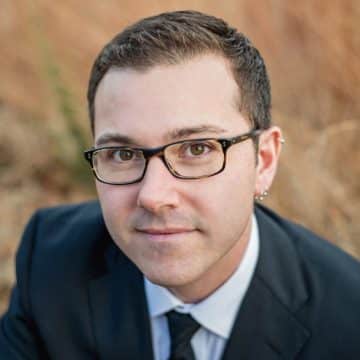
Richard Stone says part of it was “easy.” That’s hard to believe. It seems very hard, if not impossible. But not for Richard.
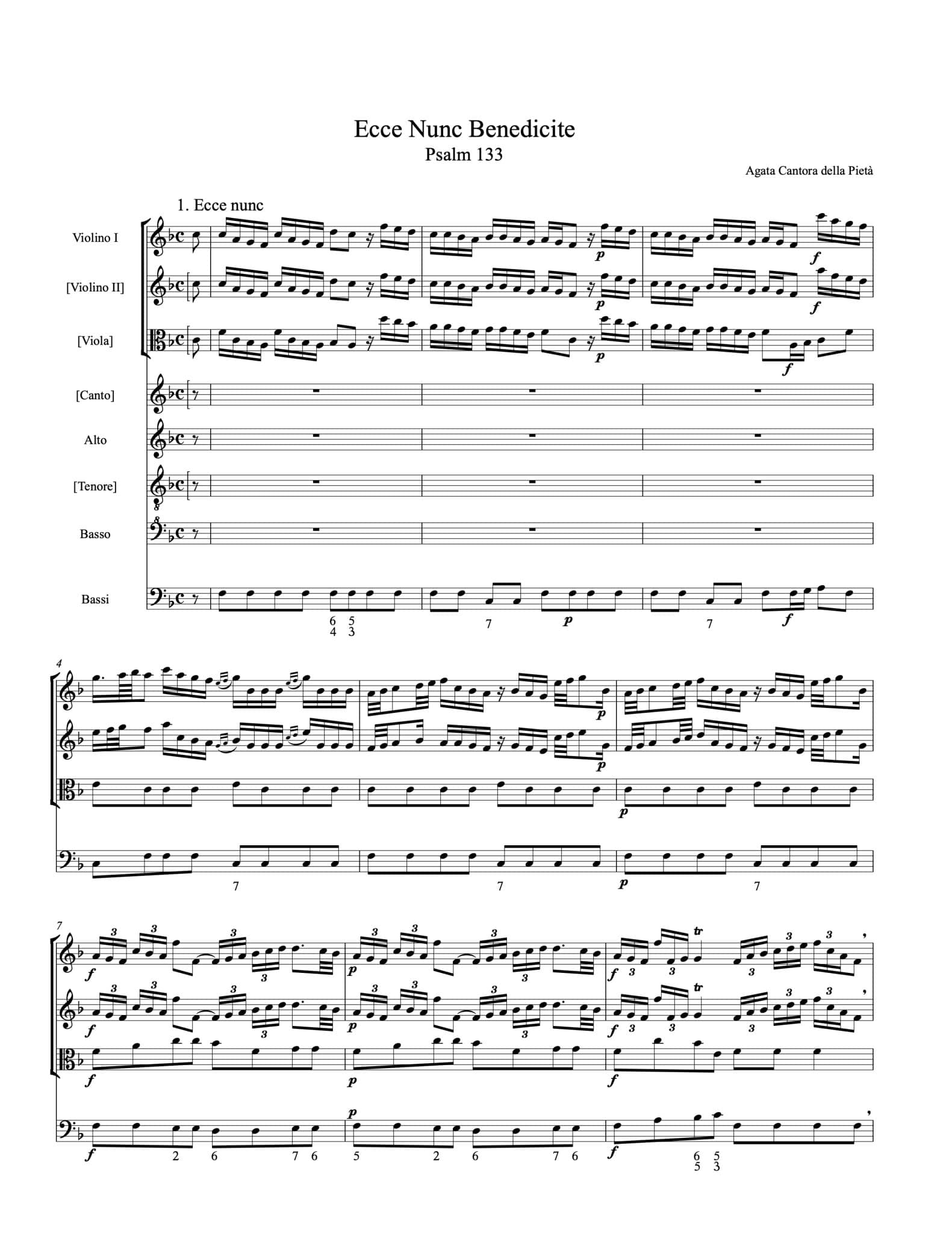
He’s talking about his work reconstructing the centerpiece of Tempesta di Mare’s big Hidden Virtuosa project this weekend, the motet Ecce Nunc (Behold Now, Psalm 134) for operatic mezzo-soprano and full orchestra by Agata Cantora.
The one and only
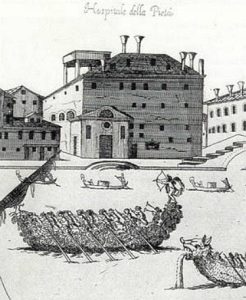
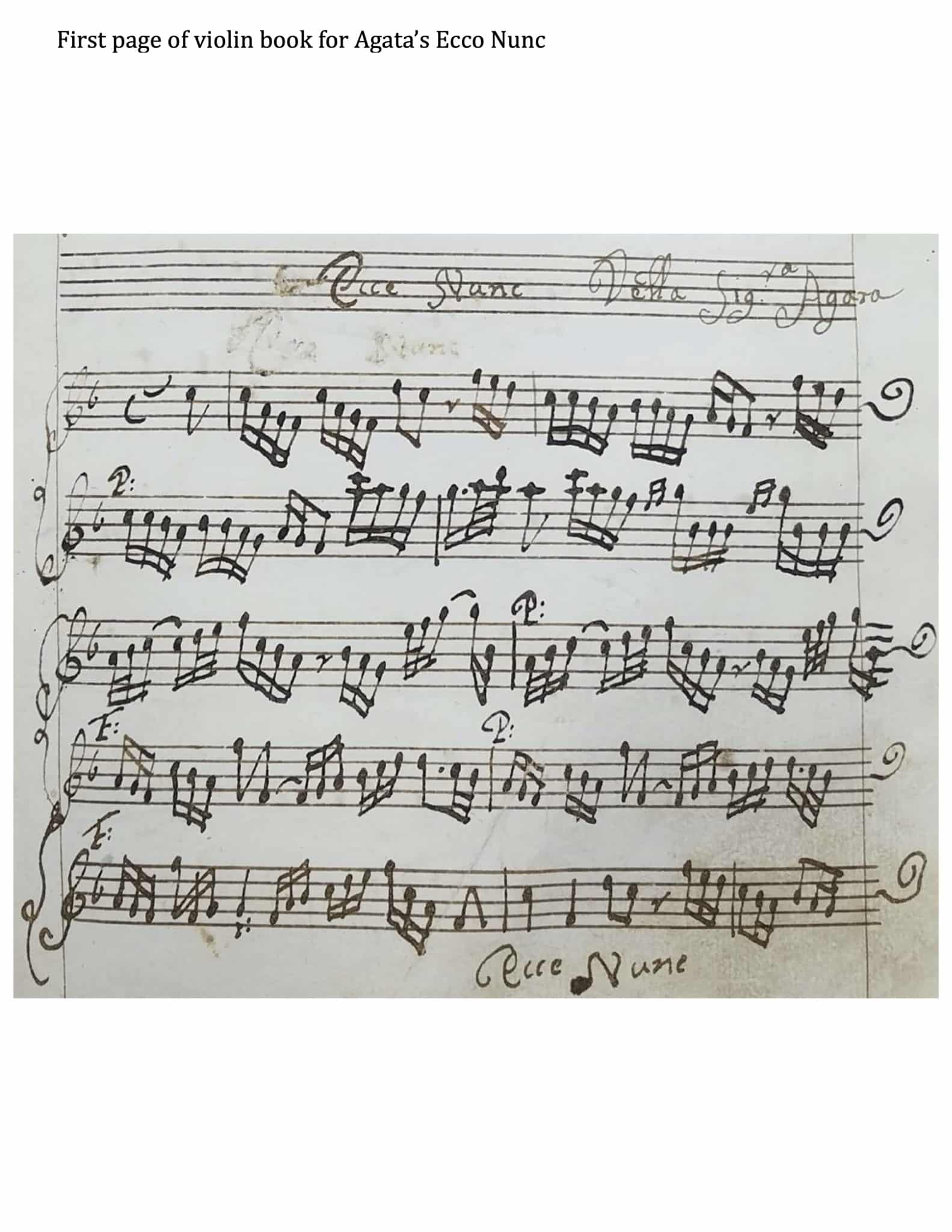
Written in the mid 1700’s, Ecce Nunc is the rarest of rare birds: the only surviving piece of music to come down to us by one of the women musicians of the Venetian ospedali herself—not by Vivaldi, not by Hasse or Porpora or one of the other outside male celebrities contracted by the institutions to provide music for its ensembles, but by Agata Cantora della Pietà. Agata Cantora was a distinguished musician—and lifelong ward—of the Pietà, one of four charitable institutions for the sick and destitute in Venice (ospedali in Italian) that fielded some of the most admired orchestras in Europe.
In fact, it is probably fair to say that not only is Ecce Nunc the only surviving piece of music by an ospidale woman, it is probably the only surviving example of writing by a woman for a European orchestra until decades later, if not centuries. What other woman would have an opportunity like this until something like the Brill Building pop music writers in 1960s New York? Consider: Agata Cantora and her fellow ospedale composers were in effect in-house content providers for a thriving entertainment industry with the expectation of a steady, constant stream of high-level repertoire. And had full first-class orchestras at their disposal. What a hot house for creativity. One can just imagine.
Imagine, sure. Sadly, imagining it is all one can do. It’s a heartbreak. When the orchestras disbanded in the early 1800s, the music in their archives went to the four winds, victim of war, fires, water, neglect, oblivious bureaucrats and so forth. Almost all of it is gone. Except for the precious Ecce Nunc. Ecce Nunc survived—sort of.
The Engine behind a modern premiere
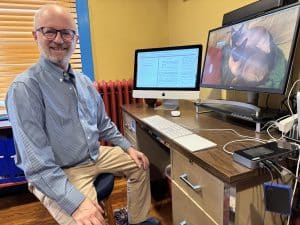 It survived, but it’s a mess. Enter the cavalry, in the form of Tempesta di Mare and the music restoration skills of their co-director. Behind the scenes, lutenist and Tempesta co-director Richard Stone has made reconstructing old music a specialty. It fascinates him. Over the decades, he has spent untold hours rehabilitating damaged music with the skill and loving attention of a master prosthetist. In fact, back at the beginning, Silvius Leopold Weiss’s Lute Concerti, 2004, Tempesta’s first album on the Chandos label, came about when Stone added ensemble parts, which were lost, to the baroque master’s extant concerto solos. Countless more reconstructions followed. Tempesta co-director Gwyn Roberts credits Richard Stone’s gift as being key to much of their work. “It’s been a real driving engine in what we do,” she’s said.
Still, Ecce Nunc presented even Richard a challenge. So much is missing! What did survive was exactly half of its partbooks (the music for a single chorus section or single instrumental section). The chorus’s alto and bass parts survive, but no choral soprano or tenor. Parts for the orchestra’s first violins and basses survive, but no second violin or violas. Perhaps most important, the entire soprano soloist’s part, the showstopper of the whole cantata, was completely gone.
A lesser mortal might throw up their hands. But for Richard, what is left is enough. The way he puts it, those remaining parts offered enough to provide a pretty good sketch of what the lost parts were. And making a pretty good sketch into a finished product is where his particular art comes in.
There is reconstruction and then there is Reconstruction
Richards likens reconstruction to what an art restorer does with a badly damaged statue. Restorers may not know exactly what the work was originally. But they can get pretty close by making a series of educated guesses. He says:
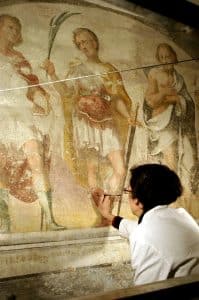
“It’s like, an art restorer can tell from the position of the shoulder that the rest of the arm was up like this. But they don’t know what specifically the hand was doing because it’s not reflected in the bicep or in the shape of the shoulder. If they know the artistic environment that statue came from, though, its history and traditions, they can make a pretty good guess.
“The music equivalent to that is, well, for instance, are the violins the first and second violins? Are they playing the same line or are they playing complementary lines? Are they doubling the singer? Is the singer doubling the first violin? Or is the first violin not interesting enough that the singer would be doubling that or that they would be doubling the singer? Or is that the second violin, has it crossed above and is playing what is in fact a more attractive line than the first violin? Once again, like the sculpture restoration, when you’ve got the basic gesture down, the rest follows.”
It comes down to being really deeply immersed in the idiom, Richard says. Once you’re comfortable with it, you’re able to guess. “You have to get creative,” he says. “I mean, you can’t just go by the book. Otherwise what you end up with is going to be dull. And from everything we know, ospedali music was anything but dull.”
The lost soprano soloist part was Ecce Nunc’s biggest challenge, of course. Agata would have intended it to be the big knock-it-out-of-the park operatic moment, but now it was gone without a trace. Richard had to bring it back. That part, he admits, was not easy.
Channeling his Agata
The way he did it was channeling his own Agata. And not just her music, but her process too. It seems unlikely that she wrote Ecce Nunc for some anonymous singer. Agata may have known her soloist very well. Agata and her soloist would almost certainly have lived and worked together in the ospidale every day, maybe for years. That specific person and her specific voice and personality must have been on Agata’s mind. The original arias must have been in a very real sense a collaboration.
Mezzo-soprano Gabriela Estefanie Solís will be singing the reconstructed arias. Richard knows her well, she’s a frequent soloist with Tempesta. And Richard loves working with singers.
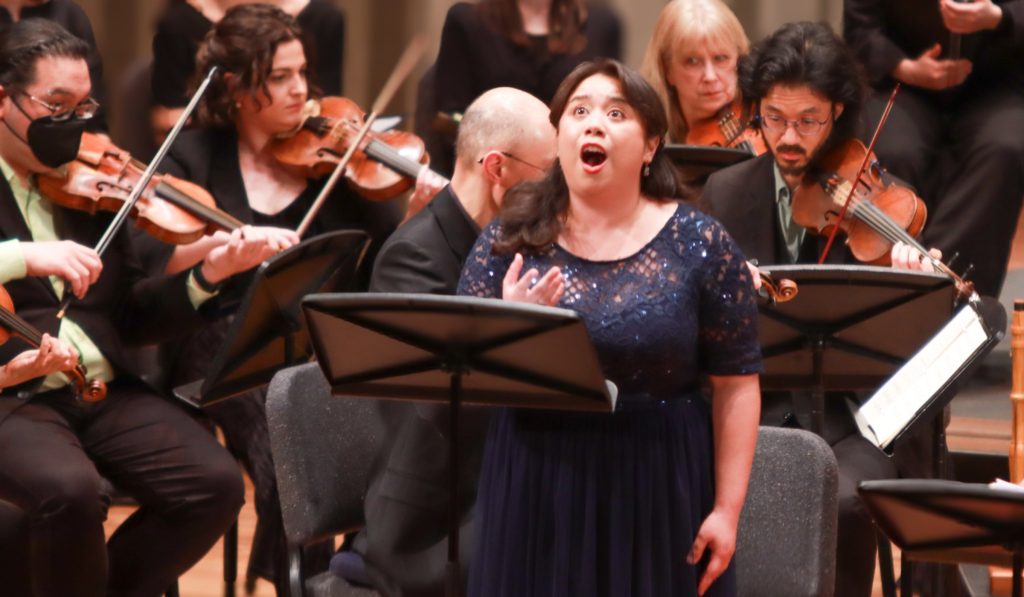
He wrote Gabi’s solo and emailed it to her. “And I asked her, what about this? Would you like me to change anything to make it more fun for you to a sing? And she absolutely did. She sent her suggestions back to me. I puzzled over them for a while because I was very attached to what I’d written. I liked it a lot. I was pleased with it. But then we worked together, and what we came up with together I like just as much. I like it better, because Gabi will sound so good in it.”
Ecce Nunc’s premiere with Tempesta is a pretty big deal. For years, what was left of Ecce Nunc was a big, tattered tease. The chance to hear one of the ospedali women once again always seemed out of reach.
Now, finally, we can indulge.
Anne Schuster Hunter is a writer, teacher of creative writing and art historian living in Philadelphia, www.anneschusterhunter.com. Richard Stone quotes are from an interview with the author October 14, 2025.