Philadelphia Baroque’s Semiquincentennial Moment:
It’s early music’s first! Believe it or not, this year’s America250 celebration is the first one of the quintennial (every fifty years) Happy-Birthday-To-America parties to include a major force of Philadelphia early music. Semicentennial, Centennial, Sesquicentennial, Bicentennial? Nope. None of them had Philadelphia early music—well, more or less. And as we find out this year, they can only have been the poorer for it.
Shostakovich vs Couperin
Not to throw shade on all those other-Tennials. It’s just that early music as we know it now didn’t exist—in America, more-or-less—before this one. It’s that new. A European import, the Early Music Revival came to the United States post-war but didn’t really take root in Philadelphia until after the 1980’s—that is, after the Bicentennial. Now there are so many gut strings and recorders on Philadelphia stages that it’s hard for a fan to find to find time for Shostakovich among all the Couperin and Buxtehude.
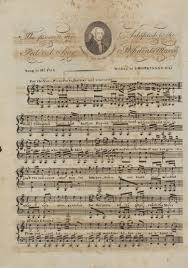
Although until recently, you’d be hard put to find much early American music in the mix, far less music from early Philadelphia. For all the interest in what the Founding Fathers and Mothers wrote, thought and read, there hasn’t been much chance to hear what they were playing and listening to. These big patriotic shindigs fall back on “Hail Columbia,” written in Philadelphia in the 1790’s, along with folk songs, broadsides and of course lots of Yankee Doodle. But there’s a long-standing conviction that the music early Americans played just wasn’t terribly interesting. Presumably, the new Americans were too busy forging democracy to pay much attention to tunes.
The Revolution-era gigging musician
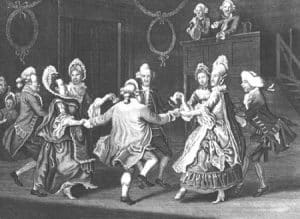
But today’s early music specialists are changing that. As baroque specialists fascinated by 17th- and 18th-century music, it’s natural they feel a certain kinship with their counterparts in this 17th and 18th-century city whose presence is still palpable here. (Thanks to Philadelphia’s pioneering historic preservationists, several original areas are still extant). Those early Americans were, after all, living surprisingly similar lives to today’s players: teaching, carrying their instruments up and down the same narrow streets and the same steep staircases in the same three-story brick buildings, even playing gigs and shows in the same parlors, ballrooms and churches where present-day musicians perform.
Spearleading the early music festivities, Tempesta di Mare invited colleague baroque groups and performers to come together for Soundtrack of Independence, celebrating the Semiquincentennial. The festival gives a chance to demonstrate the breadth of early Philadelphia music making 250 years ago—and also the vitality of the city’s flourishing baroque music community now. The Festival’s full program is at https://tempestadimare.org/tdm_event/soundtrack-of-independence/.
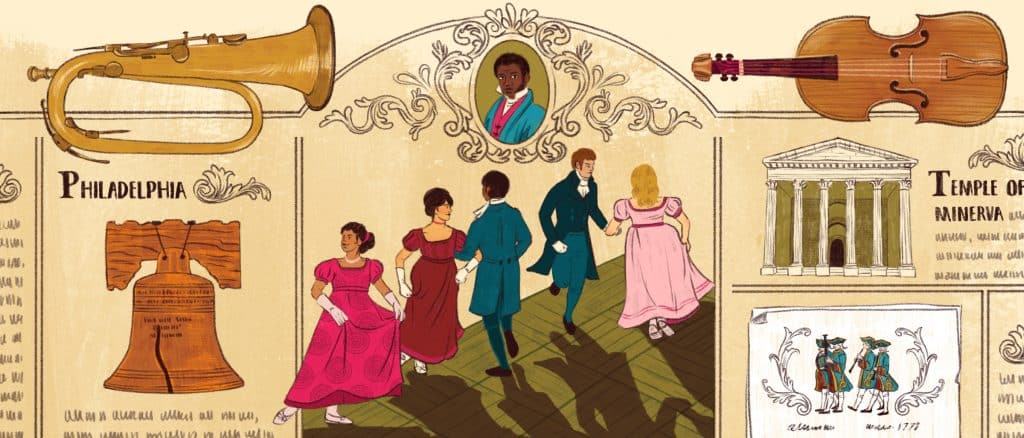
With almost ten groups participating, Tempesta’s festival gives audiences front-row seats in early Philadelphia’s parlors and taverns, dance halls and training fields, and if not exactly opera houses, then opera house precursors. It makes the case for The Birthplace of America as having been a surprisingly fun music town.
What music were they playing? Who was listening. And how?
Eve Miller, cellist and long-time Tempesta di Mare musician, got her chance to find out during the pandemic. Stuck at home, she learned about the bold-face Philadelphians—apparently Washington danced a mean minuet—and then went deeper, digging into online archives and databases, burying into mid-18th century features and reviews, even ancestry.com. What she discovered surprised her.
“In fact, they had very sophisticated taste,” she says about the colonials and early Americans. “They had their finger on the pulse of France, on the pulse of London, they really were up to date. They were listening to the latest stuff, just a couple of months later. And the performers were good, they could play really sophisticated music.” When people could play in public again, she pulled colleagues in and tried her discoveries out in a group, The Publick Pleasure. They have almost a dozen shows under their belts now, with subjects ranging from “The FIRST British Invasion” to the influx of the French-speaking émigrés fleeing revolutions in France and Haiti.
The right home for the right music
Others in the baroque music community were following the same trail, players in groups like Tempesta di Mare, Night Music, the Franklin Quartet and harpsichordist John Walthausen. They’ve been exploring and even recreating those early Philadelphia entertainments, often in the original historic spaces like Gloria Dei (Old Swedes’) Church (1698), the ballroom in The Historic Samuel Powel House (1765) and Physick House (1786), as well as the historic Arch Street Meeting House (on property continuously used by Quakers since 1682).
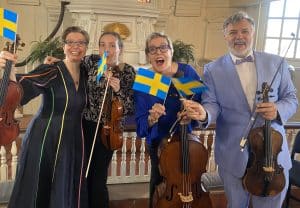
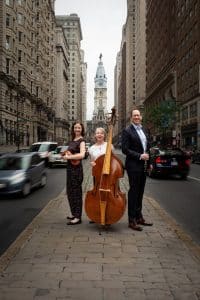
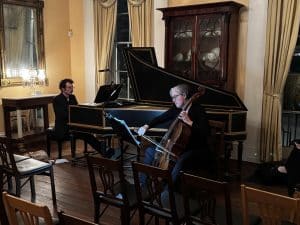
Tempesta’s Soundtrack of Independence festival provides an umbrella for Night Music’s Alfred: a masque (1757) and the Franklin Quartet’s A Federal Fanfare at the Franklins, a recital by Walthausen, and Philadelphia high school bands in an early American music play-in.
Among the Festival’s core events is a program curated by Miller, Most Favourite Music surveying what Philadelphians listened to from 1757 into the 1800’s in subscription concerts. They’re a real potpourri, as Miller describes them: “You see these things coexisting, like traditional Scottish dance tunes (with dancers from New York Baroque Dance Company) along with a string symphony by Johann Stamitz.”
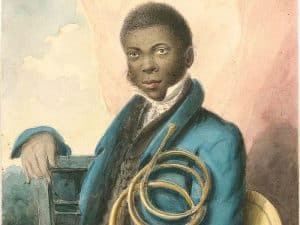
In another core event, Frank’s Bugle, Dominic Giardino, clarinetist with Music of the Regiment (his period-music group specializing in wind and brass music), spotlights early Philadelphia superstar Francis Johnson—legendary composer, bandleader, wind virtuoso and breaker of racial barriers in the 1830s. The jazz community has already rediscovered Johnson; this is a chance to get a feel for his work performed on original instruments, quite different in timbre and playing action from modern ones. Music of the Regiment also offers a show of regimental band music—music for concert bands that musical continental officers championed as passion projects during the war.
America’s First Oratorio
But the core event most remarkable in catching the revolutionary vibe has to be Tempesta’s own contribution to the festival, a performance of America Independent, or The Temple of Minerva with full orchestra and soloists. It’s an oratorio with music by baroque-great Georg Friderik Handel, contrived by Declaration-signer Francis Hopkinson and performed in December 1781 to commemorate the crucial aid provided by French forces to the Battle of Yorktown and ultimate victory. (Tempesta is able to perform The Temple of Minerva with gratitude for the yeoman service by musician Gillian B. Anderson who reconstructed the score for a, yes, Bicentennial performance on July 4, 1776 with a chamber-sized group.)
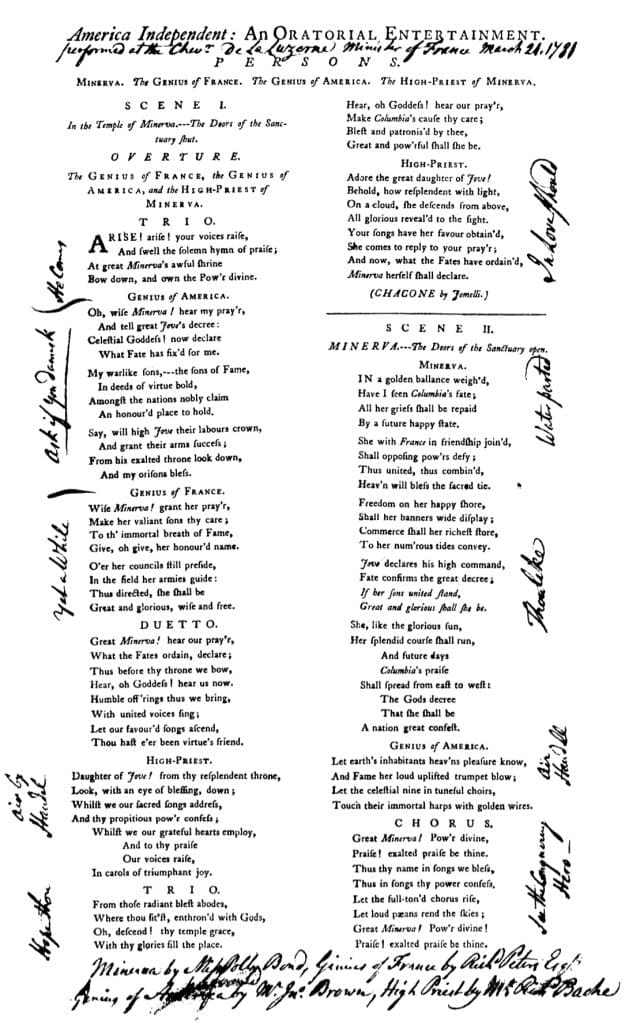
That Temple of Minerva’s performance in 1781 must have been quite a moment. It took place just three months after Yorktown when Philadelphia was in very early recovery from the long, grueling war years. The city had barely begun to heal—physically, from the high human toll and enormous damage done to the city’s fabric during British occupation and a brutal evacuation; and socially, from the high cost of hatred, suspicion and deep divisions within the citizenry.
And Philadelphians had to be remembering the notorious Mischianza, an eye-poppingly bad taste let-them-eat-cake gala celebration thrown by British officers in honor of General Howe in 1778—gala dinner, regatta up the Delaware, formal ball, the whole thing—immediately following the dreadful winter that heaped as much suffering on patriot families in the city as on Washington and the continental troops in Valley Forge.
Perhaps The Temple of Minerva was the anti-Meschianza—modest, egalitarian, and with Minerva’s doggedly upbeat benediction that “if [America’s] sons stand united, great and glorious shall she be.” And there it is, sorrow and joy, misgivings and hope and a paean to unity, all wrapped up in a delightful diversion. Music is wonderful.
The Temple of Minerva is the kind of treasure from the past that early music searches out and polishes up and provides as a gift to the future. Things like this make the whole endeavor a noble quest.
Who we were and who we are now
People have mixed feelings about these national anniversary bashes, and understandably. But in this proud old city, they do provide an opportunity to reflect on the idealist, 18th-century Enlightenment experiment that we still seem to take to heart. If early music helps us—including or particularly people like me, a first-generation Philadelphian and third-generation American—better understand who we were in the past, who we are now, and who we could be, well, dare I say it? Huzzah!
Anne Schuster Hunter is a writer and art historian living in Philadelphia, www.anneschusterhunter.com.